The Hidden Cost of Deferred Commercial Roof Maintenance…
October 19, 2026by revvluvvCommercialRoof Maintenance
The Hidden Cost of Deferred Commercial Roof Maintenance: What Portland Property Managers Need to Know
Portland, Oregon | Elements Commercial Roofing
For commercial property managers throughout Portland and the Pacific Northwest, few maintenance problems create more unexpected expenses than a leaking roof.
Whether managing apartment communities, office buildings, retail centers, warehouses, or industrial facilities, roofing problems can quickly escalate beyond the cost of repairing the roof itself.
Water intrusion can damage tenant improvements, disrupt operations, compromise insulation, and create costly emergency situations.
The challenge is that many commercial roofing failures begin with small, preventable deficiencies.
Why Are Commercial Roofs Especially Vulnerable in the Pacific Northwest?
Portland’s extended rainy season creates significant challenges for flat and low-slope commercial roofing systems.
Unlike steep residential roofs, many commercial roofs rely on carefully designed drainage systems to move water toward internal drains, scuppers, and downspouts.
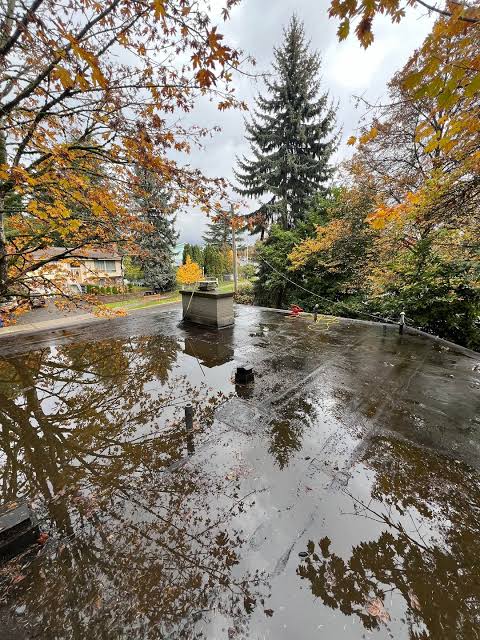
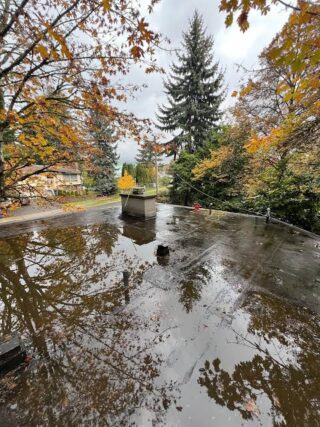
When these systems become obstructed, water can accumulate and place additional stress on the roofing assembly.
Common problems include:
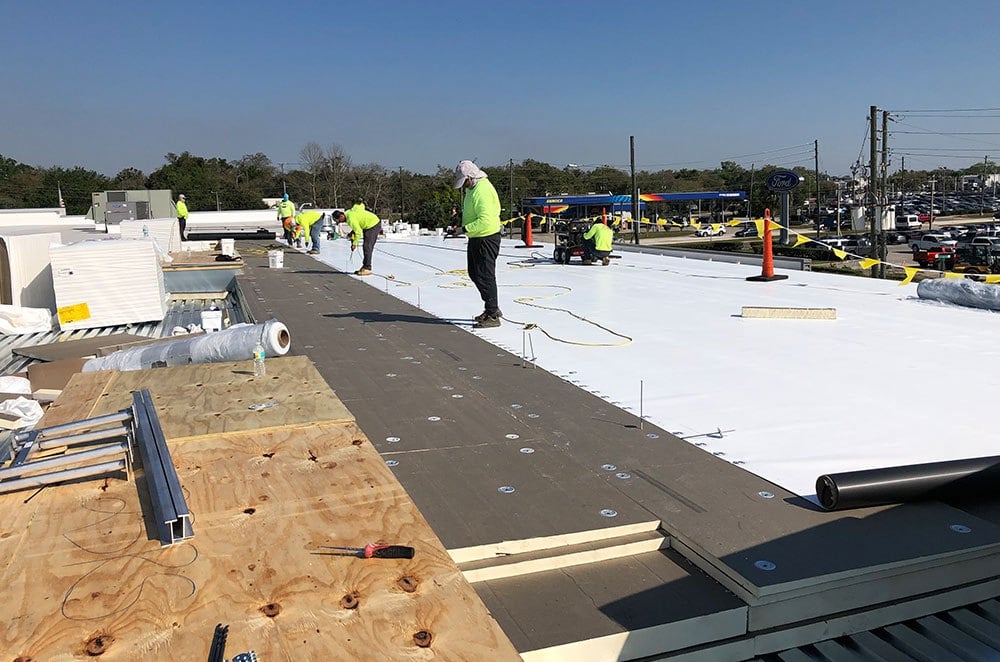
Clogged Roof Drains: Leaves, debris, and sediment can restrict drainage, contributing to ponding water and increasing the risk of leaks.
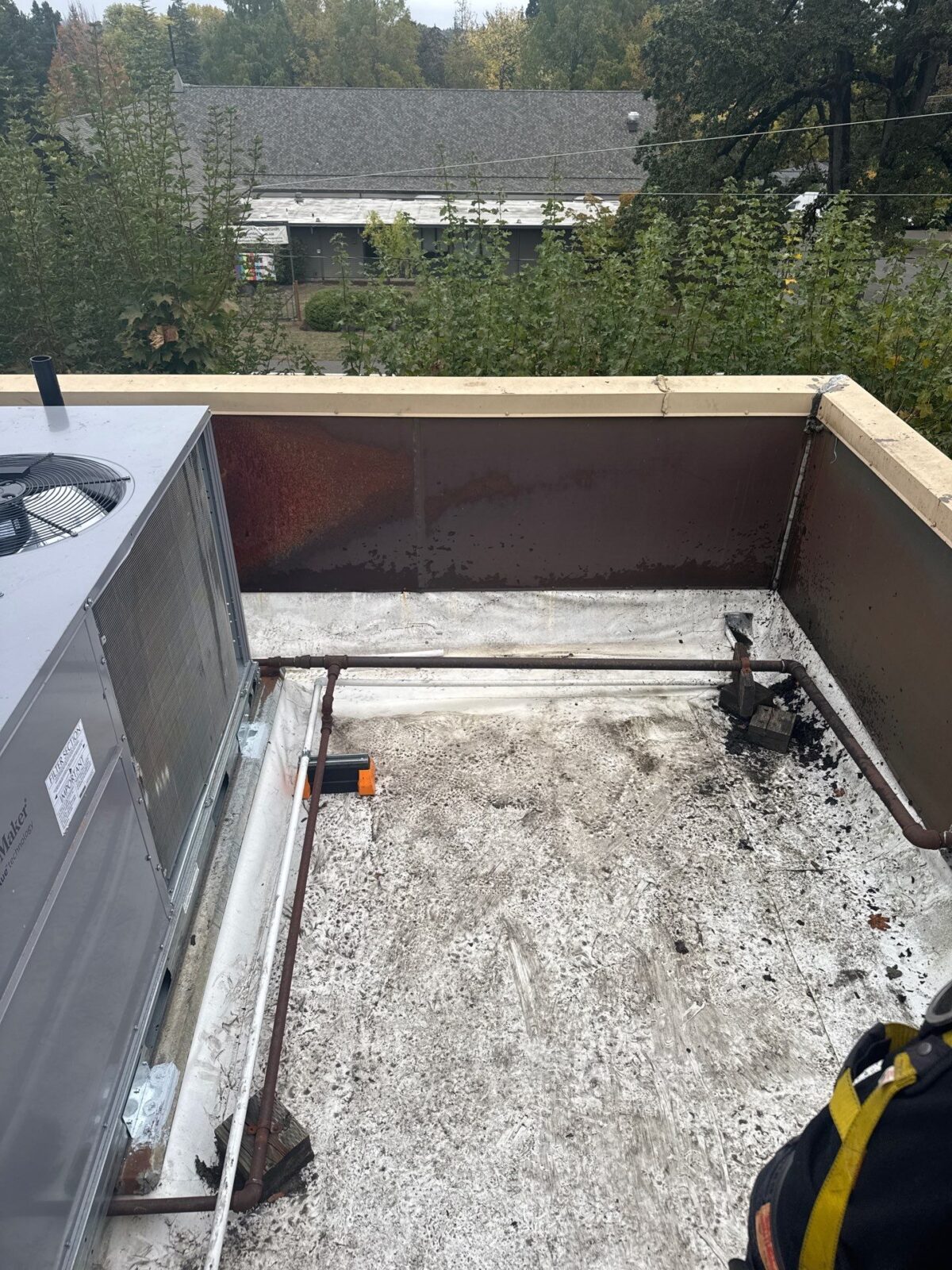
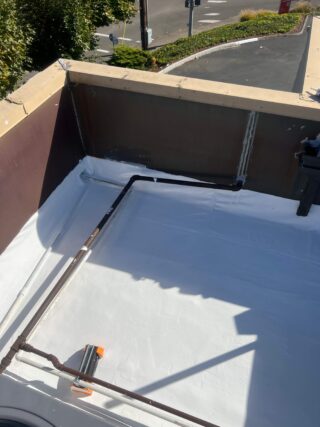
Deteriorating Flashings: HVAC curbs, plumbing penetrations, parapet walls, and roof transitions are frequent sources of moisture intrusion.
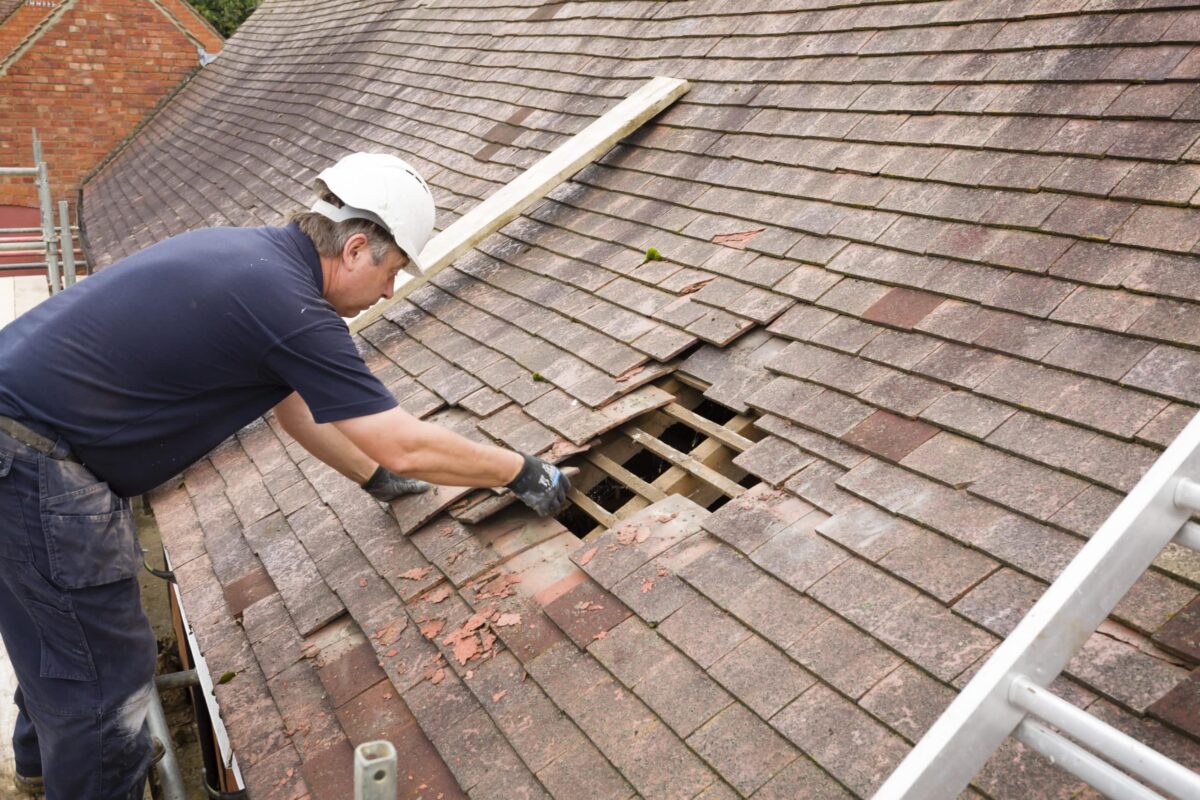
Membrane Damage: Foot traffic, rooftop equipment servicing, and normal aging can create punctures, open seams, or damaged membrane sections.
Undetected Moisture: Water can migrate beneath roofing materials and compromise insulation long before visible interior damage develops.
What Does Deferred Roof Maintenance Really Cost?
The cost of a commercial roof leak extends beyond the initial repair.
Consider an apartment community where a minor roof penetration develops a slow leak. If the issue remains undetected, moisture may damage insulation, drywall, flooring, and occupied living spaces.
Property managers may then face multiple expenses, including emergency roofing repairs, interior restoration, tenant coordination, and potential disruption to rental operations.
For commercial buildings, the financial consequences can be even greater when leaks affect inventory, electrical systems, or business operations.
Addressing roofing deficiencies early is generally more manageable than coordinating extensive repairs after significant water intrusion.
How Often Should Commercial Roofs Be Inspected?
A practical maintenance strategy includes professional roof inspections at least twice annually, typically before and after the primary rainy season.
Additional inspections should follow severe storms, major rooftop equipment installations, or reports of unexplained moisture.
An effective commercial roofing maintenance program should include:
- Clearing roof drains, scuppers, and drainage pathways
- Inspecting membrane seams, flashings, and penetrations
- Evaluating rooftop HVAC curbs and equipment connections
- Identifying ponding water and drainage deficiencies
- Documenting roof conditions with photographs
- Prioritizing repairs and planning future capital expenditures
Consistent documentation also helps property managers communicate roofing conditions to building owners and develop more predictable maintenance budgets.
Can Maintenance Extend the Life of an Existing Commercial Roof?
In many cases, yes.
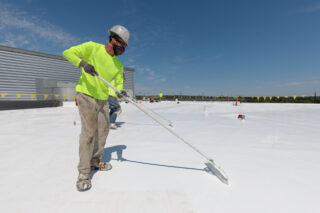
Commercial roofing systems that remain structurally sound may benefit from targeted repairs, preventative maintenance, or roof restoration.
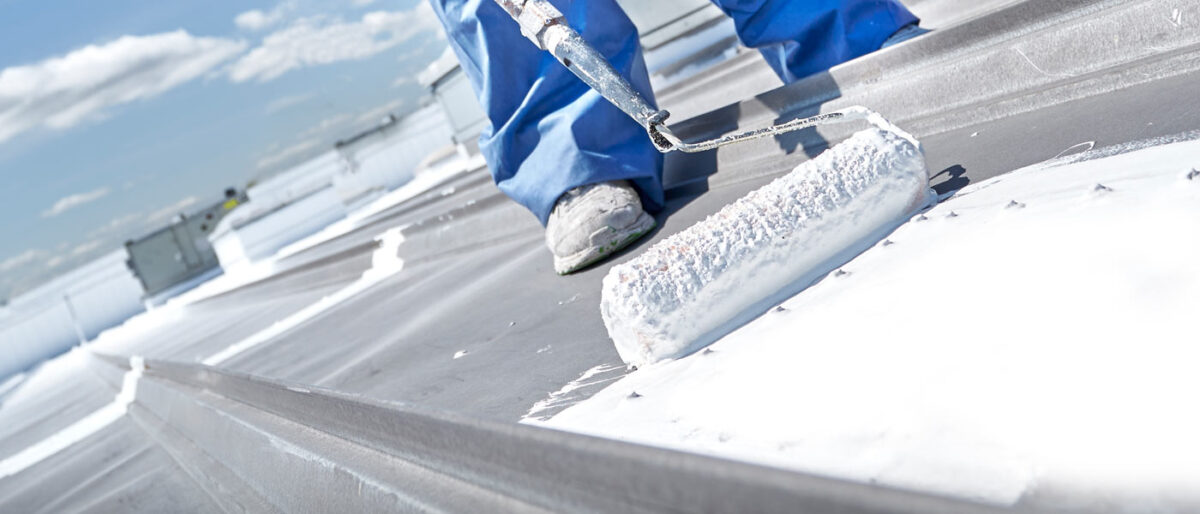
Depending on the existing roofing materials and their condition, restoration options may include compatible silicone coating systems, membrane repairs, and additional waterproofing measures.
However, roofs with extensive moisture damage or deteriorated decking may require more substantial repairs or replacement.
A professional evaluation helps determine the most appropriate approach.
Protect Your Commercial Property Investment
At Elements Commercial Roofing, we work with property managers, building owners, and facility managers throughout the Portland metropolitan area.
Our services include commercial roof inspections, emergency leak repairs, preventative maintenance, roof restoration, and complete roofing system replacement.
We help property managers identify roofing deficiencies, prioritize repairs, and develop practical solutions that protect their buildings and budgets.
Don’t let an overlooked roofing problem become your next emergency maintenance expense.
Schedule Your FREE Commercial Roof Inspection Today!
Call: 503.699.6905
Request Your Free Commercial Roofing Inspection Online
Elements Commercial Roofing — Leaky Roof’s Destroy Lives!
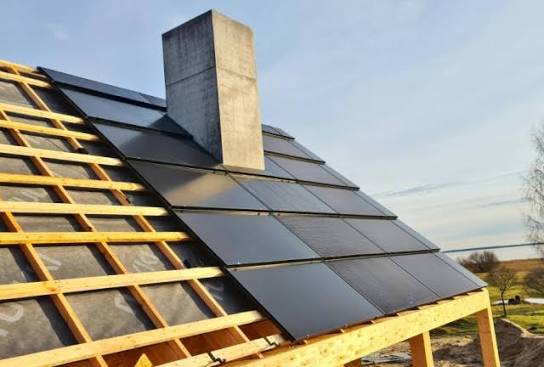
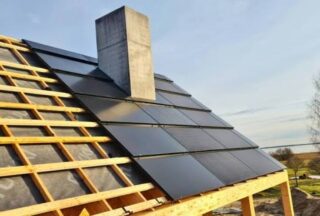 One of the biggest shifts in 2026 is the rise of solar-integrated and solar-ready roofing systems. These roofs are designed to seamlessly accommodate solar panels, making it easier and more cost-effective for homeowners to switch to renewable energy. In Oregon, where incentives for green energy remain strong, installing a solar-ready roof now positions your home for future savings and increased property value. Metal roofing, particularly standing seam options, pairs beautifully with solar technology while offering exceptional longevity—often lasting 40-70 years with minimal maintenance.
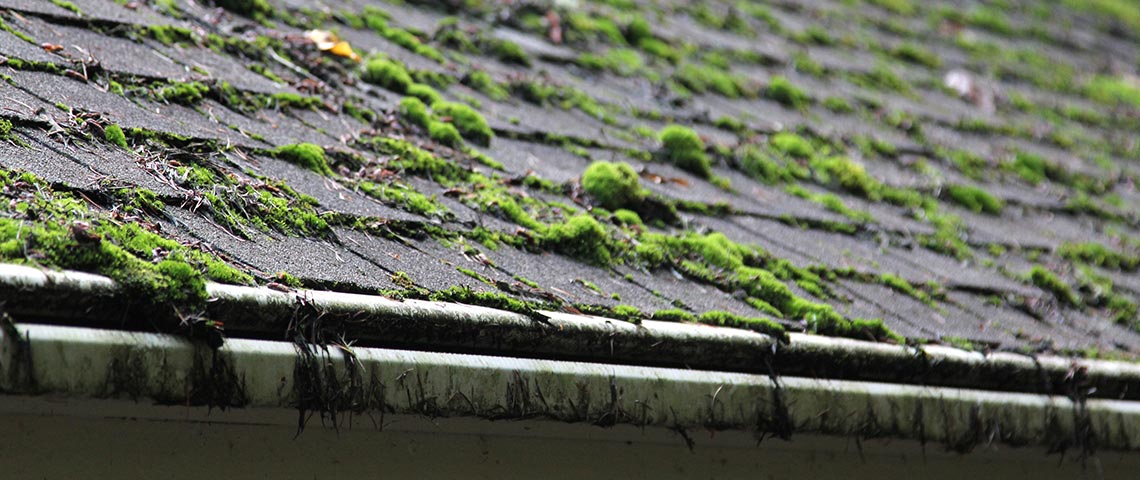
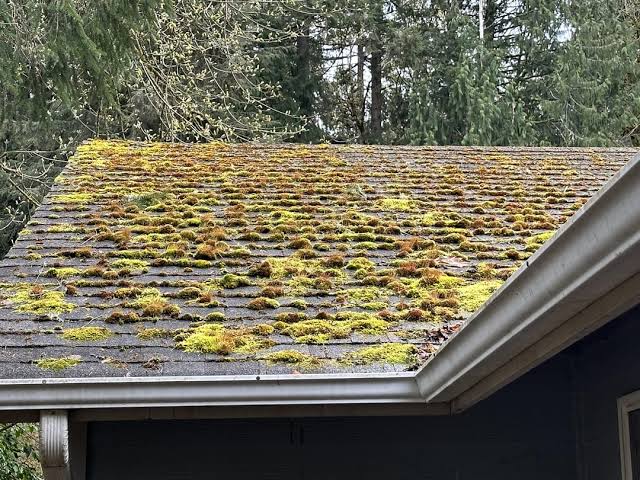
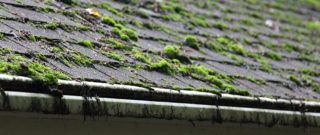 The Pacific Northwest offers breathtaking landscapes, but its climate poses relentless challenges for homeowners’ roofs. With persistent rain, high humidity, moss-prone conditions, and occasional powerful windstorms, roofs in Portland, Seattle, and surrounding areas face accelerated wear compared to drier regions. At Elements Roofing, we’ve helped countless homeowners protect their properties against these regional threats. This post explores the hottest roofing issues in the PNW and shares practical advice to extend your roof’s lifespan.