
Moss, Algae & Lichen: The Silent Roof Destroyers of the Pacific Northwest
September 23, 2026by revvluvvUncategorized
Moss, Algae & Lichen: The Silent Roof Destroyers of the Pacific Northwest
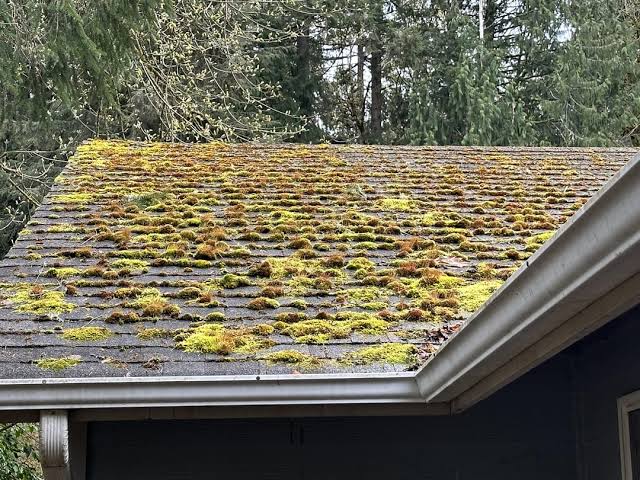
If you live in the Portland metro or anywhere in the Pacific Northwest, you’ve almost certainly seen it: the green fuzzy patches that start small on the north side of a roof and gradually take over. Moss, algae, and lichen are not just cosmetic problems here—they are among the top reasons roofs fail years ahead of their rated lifespan.
Our climate is perfect for these organisms. We average 36–40+ inches of rain spread across roughly 150 wet days a year. Mild temperatures rarely drop low enough long enough to kill the spores, and dense fir, maple, and oak canopies create the shade that keeps roof surfaces damp for weeks at a time. The result is a year-round biological attack that most other regions simply do not face.
Moss is the most aggressive. It retains many times its weight in water, lifts shingle edges, and creates tiny pockets where moisture stays trapped against the roof deck. Over time this leads to granule loss, accelerated asphalt breakdown, and eventual leaks. Algae (the black streaks many people mistake for dirt) is less structurally damaging but still holds moisture and shortens the life of the protective granules. Lichen adds another layer of surface degradation.
Left alone, these growths can cut 5–10 years off a roof’s service life. Insurance companies sometimes treat heavy moss as deferred maintenance and deny related claims, so prevention is not optional.
What actually works in the PNW
- Soft-wash cleaning (low-pressure application of specialized solutions) removes existing growth without stripping granules. High-pressure washing is almost always a mistake on asphalt.
- Zinc or copper strips installed along the ridge release ions with every rain that inhibit regrowth downslope. They are one of the most cost-effective long-term deterrents.
- Algae-resistant (AR) architectural shingles with copper or zinc granules slow colonization dramatically compared with standard 3-tab products.
- Tree trimming to increase sunlight and airflow on shaded slopes makes a noticeable difference.
- Annual professional inspections catch early growth before it becomes established.
Homeowners who schedule a moss treatment every 12–24 months (more often under heavy tree cover) and keep gutters clear of needles and leaves consistently get longer life from their roofs. Waiting until the moss is thick and the shingles are cupping is the expensive route.
At Elements Roofing we see the full range of damage caused by unchecked biological growth—from minor granule loss to decks that need replacement. The good news is that most of it is preventable with the right materials and a simple maintenance rhythm matched to our climate.
Don’t wait for the next rainy season to reveal problems that started last year. Call Elements Roofing at 503.699.6905 or email contact@roofportland.com today for a free roof inspection and moss evaluation. We’ll show you exactly what’s growing on your roof and the smartest way to stop it.